Introduction: Why Smoke Alarms Are Your Home's Most Important Safety Device
When a smoke alarm works, it gives your family critical minutes to escape. When it doesn't, the consequences can be fatal. Working smoke alarms cut the risk of dying in a home fire by 60%, according to NFPA data. Nearly three out of five home fire deaths occur in properties with no smoke alarms or alarms that failed to operate.
This guide covers how to choose the right alarm, where to place it, how to install it, and how to maintain it so it works when you need it most.
If you live in an older home—30 years or more—you'll find specific guidance on layout quirks, wiring challenges, and outdated wiring configurations.
Quick Takeaways
- Install smoke alarms on every level, inside every bedroom, and outside every sleeping area per NFPA guidelines
- Dual-sensor alarms detect both fast-flaming and slow-smoldering fires
- Battery-operated units are DIY-friendly; hardwired alarms need a licensed electrician to install
- Test monthly, replace batteries annually, and swap the unit every 10 years
Choosing the Right Type of Smoke Alarm for Your Home
Sensor Technology: Ionization vs. Photoelectric
Smoke alarms use two primary sensor types:
- Ionization alarms respond faster to fast-flaming fires with open flames
- Photoelectric alarms detect slow-smoldering fires earlier, like those caused by cigarettes or electrical malfunctions
The USFA recommends dual-sensor smoke alarms, which contain both technologies and provide comprehensive protection against both fire types. Photoelectric models work well near kitchens and bathrooms because they're less prone to nuisance alarms from steam and cooking smoke.
Power Source Options
Choose from three power configurations:
Standard 9V Battery
- Easy DIY installation with no wiring required
- Ideal for rentals and homes without existing hardwired systems
- Requires annual battery replacement
10-Year Sealed Lithium Battery
- Maintenance-free for 10 years
- Iowa code requires this type for all new battery-powered alarms installed after June 30, 2021
- Replace the entire unit when it chirps or reaches 10 years
Hardwired with Battery Backup
- Connects directly to your home's electrical system
- Battery backup ensures operation during power outages
- Iowa code has required these in new construction since 1991 — and many older Des Moines homes may still lack them
- Must be installed by a licensed electrician
Combination and Interconnected Alarms
Two upgrades are worth adding to your list:
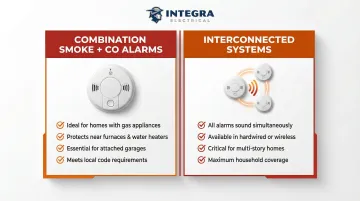
- Combination smoke + CO alarms — If your home has gas appliances, a furnace, or an attached garage, combination units handle both threats. The International Residential Code and NFPA 72 require CO alarms outside sleeping areas in these situations.
- Interconnected systems — When one alarm triggers, all alarms sound. Hardwired or wireless options both work. This is especially important in multi-story homes where a basement fire may not be audible upstairs.
Where to Place Smoke Alarms in Your Home
NFPA Placement Requirements
Install smoke alarms in these locations:
- Inside every bedroom — closed doors slow smoke spread, so each sleeping room needs its own alarm
- Outside every sleeping area — hallways adjacent to bedrooms require coverage
- On every level of the home — including the basement, even if unfinished
Ceiling vs. Wall Placement
Smoke rises, making ceiling placement ideal. Mount the alarm:
- At least 4 inches from any wall when ceiling-mounted
- In the center of the room when possible
- If wall mounting is necessary, position the top of the unit no more than 12 inches below the ceiling
Avoid placement near windows, doors, air vents, or ceiling fans where drafts can prevent smoke from reaching the sensor.
In bedrooms specifically, ceiling-center placement is most effective. Mounting near the doorway also works well — smoke from a hallway fire enters through the door first, so either position gives the alarm early detection.
Kitchen and Bathroom Spacing
Place alarms at least 10 feet from cooking appliances to minimize false alarms from steam and cooking smoke. If your alarm triggers during cooking, use the "hush" button to silence it temporarily—never remove the battery, which creates a dangerous coverage gap.
Coverage Gaps in Older Homes
Homes 30+ years old often have:
- Finished basements added after original construction
- Converted attics used as bedrooms
- Room additions that create new sleeping areas
- Closed-off sections that weren't part of the original floor plan
Walk through every level and map out all sleeping and living areas to ensure no zone is missed. A home with four small bedrooms off a central hallway, for example, typically needs at least six alarms — one per bedroom, one in the hallway, and one on each additional level. If you're not sure your older home has adequate coverage, an electrical safety walkthrough can help identify gaps before they become a problem.
Step-by-Step: How to Install a Battery-Operated Smoke Alarm
Tools You'll Need
- Pencil
- Drill with 3/16" (5 mm) drill bit
- Phillips screwdriver
- Hammer
- Wall anchors and screws (included with alarm)
Installation Steps
1. Mark the Drill Points Use the mounting base as a template. Position it on the ceiling at least 8 inches from any wall. Mark the screw hole locations with a pencil.
2. Drill and Anchor Drill holes at the marked points. Tap the included plastic anchors into the holes with a hammer until they're flush with the ceiling surface.
3. Mount the Base and Attach the Alarm Drive screws into the anchors, align the mounting base, and secure it in place. Twist the alarm unit into the base until it clicks, insert the batteries, and press the test button. The alarm should beep loudly.

Hardwired Alarm Installation
Hardwired alarms connect directly to your home's electrical system. Installation requires:
- Turning off the circuit breaker that controls the alarm location
- Connecting wires: black (hot) to black, white (neutral) to white, green or bare (ground) to ground
- Attaching the interconnect wire (typically orange or red) if linking multiple alarms
- Securing the wiring harness before mounting the alarm base
Important: If you're uncomfortable working with electrical wiring, or your home has outdated wiring like knob-and-tube or aluminum, call a licensed electrician. family-owned Integra Electrical handles hardwired smoke alarm installation in Des Moines — including older homes where aging wiring often hides additional safety issues.
How to Maintain Your Smoke Alarms — And When to Replace Them
Installing alarms correctly is only half the job. Keeping them functional takes a simple, consistent routine.
Monthly Testing
Press and hold the test button until the alarm sounds. If there's no beep:
- Replace the battery first
- Test again
- If still silent, replace the entire unit
Tie testing to a recurring monthly reminder—first of the month, bill-pay day, or another regular event.
Battery Replacement Schedule
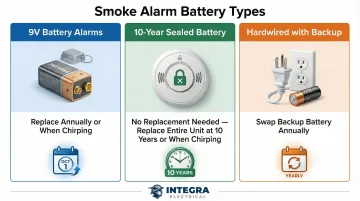
- 9V battery alarms: Replace batteries at least once per year, or sooner if the unit chirps
- 10-year sealed battery models: No battery replacement needed; replace the entire unit when it chirps or reaches 10 years
- Hardwired alarms with backup: Swap backup batteries annually
Cleaning Your Smoke Alarm
Dust and debris block the sensor chamber, causing false alarms or missed detections. Clean your alarms every 6 months:
- Use a vacuum with a soft brush attachment
- Gently vacuum along the sides and vents
- Do not open the unit or touch the sensor directly
The 10-Year Replacement Rule
All smoke alarms must be replaced 10 years from the manufacture date. Sensor sensitivity degrades over time regardless of whether the alarm still sounds during a test.
Find the manufacture date printed on the back of the unit. If it's missing or illegible, replace the alarm immediately—it may already be past its expiration.
Bottom line: A smoke alarm that looks fine and beeps on test can still fail to detect a real fire if it's more than 10 years old.
When to Call a Licensed Electrician for Smoke Alarm Help
Situations Requiring Professional Installation
Call a licensed electrician when:
- Installing or replacing hardwired smoke alarms
- Upgrading to an interconnected alarm system
- Troubleshooting alarms that chirp or trigger without cause despite new batteries
- Working with damaged, outdated, or unfamiliar wiring
In older homes with knob-and-tube or aluminum wiring, hardwired alarm installation creates fire risks if done incorrectly. Knob-and-tube systems lack grounding conductors, and aluminum wiring connections can overheat without proper installation techniques.
Signs of Deeper Electrical Issues
Look for these warning signs that go beyond the alarm itself:
- Frequently tripped breakers near alarm circuits
- Discolored or warm outlets near the alarm's hardwire location
- Alarms that shut off unexpectedly or fail to stay powered
- Burning smells or buzzing sounds near the alarm
These symptoms warrant a full electrical inspection, not just alarm replacement.
Professional Support for Des Moines Homeowners
If any of those warning signs sound familiar, it's worth having a licensed electrician take a look before the problem worsens. Integra Electrical offers a complimentary (zero-cost) Safety Evaluation using a Digital Voltage Analyzer for Des Moines area homeowners, which is particularly useful in older homes where hidden wiring problems often affect alarm performance. With over 20 years of experience, their licensed technicians can install hardwired or interconnected alarms correctly and flag wiring issues before they become emergencies.
Frequently Asked Questions
What is the average cost to install a smoke detector?
Battery-operated units cost $15–$50 and are DIY-installable. Professional installation of hardwired alarms ranges from $70–$150 per unit, with electricians charging $50–$100 per hour for labor. Final pricing varies based on the number of units and your home's existing wiring.
Do you need an electrician to install smoke alarms?
Battery-operated alarms can be installed by any homeowner with basic tools. Hardwired alarms that connect to your home's electrical system require a licensed electrician to ensure safe, code-compliant installation—especially in older homes with complex or outdated wiring.
What is the best place to put a smoke detector in a bedroom?
The center of the bedroom ceiling is ideal because smoke rises and spreads from the ceiling downward. Placing the alarm near the doorway also works well, since smoke from a hallway fire enters the bedroom through the door first.
Can you put a smoke alarm on a wall instead of a ceiling?
Yes, wall installation is permitted, but the alarm must be mounted high on the wall—no more than 12 inches below the ceiling per NFPA guidelines. Ceiling placement is always preferred when possible because smoke rises and accumulates at the highest point first.
Will the fire department install a new smoke detector?
Some local fire departments offer free smoke alarm installation programs for qualifying residents. West Des Moines Fire Department provides installation assistance for eligible homeowners. Contact your local fire department's non-emergency line to ask about programs in your area.
Can a smoke detector detect vape?
Yes, some smoke alarms—particularly photoelectric models—can be triggered by vape aerosol. The particles in vapor are similar in size to smoke particles, though sensitivity settings and proximity to the alarm affect whether it triggers.