Introduction
The U.S. Fire Administration reports that 23,700 residential electrical fires occurred in 2023 alone, causing 305 deaths, 800 injuries, and $1.5 billion in property damage. Most of those fires started silently — inside walls, behind outlets, or deep in electrical panels — long before anyone smelled smoke or saw a flame.
Unlike a stovetop fire, electrical fires often smolder for hours before breaking through. By the time you smell something burning, the fire may already be moving through wall cavities and ceiling joists.
The good news: most electrical fires are preventable. The right safety habits, a periodic professional inspection, and attention to early warning signs can stop this from happening in your home.
This guide walks through the leading causes, what warning signs to watch for, how to reduce your risk, and what to do if a fire starts.
Key Takeaways
- Faulty wiring and overloaded circuits cause the majority of home electrical fires
- Plug major appliances directly into wall outlets — never use extension cords as permanent solutions
- Flickering lights, tripping breakers, warm outlets, and burning smells all signal danger
- If your home is 30+ years old, have a licensed electrician inspect the wiring
- Install GFCI outlets in kitchens, bathrooms, garages, and outdoor areas — and test them every month
Common Causes of Electrical Fires in Homes
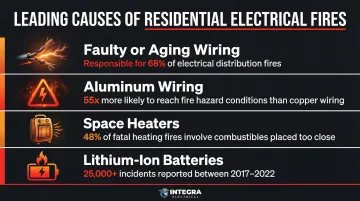
The three most frequent causes of residential electrical fires are faulty or aging wiring, overloaded circuits and outlets, and improper use of extension cords and power strips. Wiring and related distribution equipment account for 68% of electrical distribution fires and 42% of resulting civilian deaths.
Older Homes Face Compounding Risk
Homes built before the 1990s carry significantly higher electrical fire risk. Wiring materials, panel capacity, and outlet configurations from that era were never designed to handle today's electrical loads. As these systems age, hidden deterioration creates dangerous conditions that homeowners can't detect without professional inspection.
Two aging wiring types are especially dangerous:
- Homes built before 1972 with aluminum wiring are 55 times more likely to reach fire hazard conditions at outlets than copper-wired homes
- Knob-and-tube systems lack grounding conductors, have insulation that degrades into a fire hazard, and overheat badly when buried under building insulation
Other Contributing Factors
Aging wiring isn't the only culprit. Several everyday habits and appliances also ignite fires:
- Using bulbs rated above a fixture's wattage limit generates excessive, concentrated heat
- 48% of fatal heating fires involved placing a space heater too close to combustibles
- The Consumer Product Safety Commission recorded over 25,000 lithium-ion battery fires or overheating incidents between 2017 and 2022
How to Prevent Electrical Fires at Home
Electrical fire prevention requires three elements working together: safe everyday habits, proper use of devices and appliances, and an electrical infrastructure in good condition. Neglecting any one of these creates vulnerability.
Outlet and Extension Cord Safety
Avoid Overloading Outlets
Never use outlet adapters to multiply plug slots. These devices bypass the outlet's designed capacity, creating heat buildup and fire risk. Basic rules:
- Insert plugs fully into sockets — partial insertion creates arcing
- Never daisy-chain power strips (plugging one into another)
- Use only power strips with built-in overload protection
Extension Cords Are Temporary Only
The Electrical Safety Foundation International reports that roughly 3,300 home fires originate in extension cords each year, causing 50 deaths and 270 injuries. These fires are preventable.
Extension cord rules:
- Never run cords under rugs, through doorways, or pinched behind furniture — trapped heat causes insulation to melt and ignite
- Never use extension cords permanently with refrigerators, space heaters, air conditioners, or other major appliances
- Use extension cords only for temporary power needs lasting days, not months
If you find yourself relying on extension cords long-term, hire a licensed electrician to install additional permanent outlets.
GFCI and Tamper-Resistant Outlets
Two outlet upgrades that significantly reduce fire and injury risk:
- GFCI outlets are code-required in kitchens, bathrooms, garages, basements, and outdoor areas. They cut power instantly when a ground fault is detected — test yours monthly using the test button
- Tamper-resistant (TR) outlets block foreign object insertion and should be installed in homes with young children
Appliance and Device Safety
Appliance habits account for a significant share of preventable home fires. A few rules to follow:
- Plug refrigerators, washers, dryers, ovens, and dishwashers directly into dedicated wall outlets — extension cords can't handle their current draw
- Unplug toasters, coffee makers, and hair dryers when not in use to eliminate standby draw and short-circuit risk
- Never leave space heaters or similar high-draw appliances running unattended
Light Bulb Safety
- Match bulb wattage to the fixture's maximum rating (printed inside the socket or on the fixture)
- Ensure bulbs are screwed in securely — loose bulbs can arc
- Keep lampshades, curtains, and other combustibles away from bulbs and fixtures
Lithium-Ion Battery Charging
Modern devices use lithium-ion batteries that can overheat and ignite if charged improperly. Key charging rules:
- Use only the manufacturer's original charging cord and adapter
- Never charge devices on beds, couches, or other soft surfaces that trap heat
- Disconnect chargers once the battery reaches full charge
- Stop using any battery that shows signs of swelling, unusual odors, excessive heat, or discoloration
Wiring, Panels, and Electrical System Safety
Wiring Defects Are a Leading Cause
Deteriorating insulation, loose connections, and undersized wiring create fire risk hidden inside walls where homeowners can't see it. Older homes with aluminum wiring or knob-and-tube systems face the highest risk.
Inspection Frequency
The U.S. Fire Administration recommends having a professional electrician inspect your home's electrical wiring system at least every 10 years. Inspect sooner if:
- Your home is 30+ years old
- You've recently purchased a previously-owned home
- The home has undergone major renovation
- You've added major new appliances in the last 10 years
Arc Fault Circuit Interrupters (AFCIs)
AFCIs detect dangerous electrical arcing that standard circuit breakers miss. The Consumer Product Safety Commission estimates that AFCIs could prevent more than 50% of electrical fires that occur annually. AFCIs are especially valuable in older homes where wiring deterioration creates hidden arc faults.
family-owned Integra Electrical's Safety Evaluation
Integra Electrical's licensed technicians specialize in homes 30 years and older throughout the Des Moines metro. They offer a complimentary (zero-cost) Safety Evaluation using a Digital Voltage Analyzer to detect overloaded circuits and uncover hidden risks before they become emergencies.
Warning Signs Your Home's Electrical System Is a Fire Risk
Many electrical fires are preceded by warning signs that homeowners overlook or dismiss. Knowing which signals require immediate action versus prompt professional attention can prevent tragedy.
Call an Electrician Promptly for These Signs
Schedule an inspection if you notice:
- Flickering or dimming lights when appliances turn on
- Circuit breakers that trip repeatedly
- Fuses that blow frequently
- Outlets or switches that feel warm or show discoloration
- Plugs that spark when inserted or removed
- Mild shock or tingle when touching appliances or outlets
Emergency Signs — Cut Power and Call for Help
Treat these as emergencies:
- Buzzing or sizzling sounds from walls, outlets, or switches indicate active electrical arcing
- Burning smells — even faint, occasional odors resembling burning plastic or hot metal — near outlets, switches, or the electrical panel signal wiring insulation burning inside walls
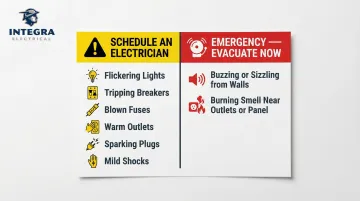
If you detect these emergency signs, shut off power at the main panel if you can do so safely, evacuate the home, and call 911.
Once you know what to watch for, your next line of defense is making sure alarms catch what your eyes and ears miss.
Install and Maintain Smoke Alarms on Every Level
Working smoke alarms reduce the risk of dying in a home fire by approximately 60%. To make sure yours are ready when it matters:
- Install detectors on every level of your home and inside every bedroom
- Test batteries monthly
- Replace any unit older than 10 years
Common Electrical Fire Safety Mistakes to Avoid
Using Extension Cords as Permanent Wiring
Plugging space heaters, air conditioners, or refrigerators into extension cords is one of the most dangerous common habits. The cord overheats, insulation melts, and fire can start inside a wall or under a rug with no visible flame. By the time you smell smoke, the fire may already be spreading through wall cavities.
Ignoring Early Warning Signs
Homeowners often dismiss tripping breakers or flickering lights as "just a quirk" of an older home. These signals mean your electrical system is being pushed beyond safe limits — and delaying action significantly raises the risk of a fire starting.
DIY Electrical Work Without Proper Knowledge
DIY electrical mistakes create fire risks that can go undetected for years. Common problems include:
- Improperly wired outlets or reversed polarity
- Wrong gauge wire on a circuit
- Too many wires connected to a single breaker terminal
Each of these can cause overheating and ignition without any visible warning. Leave electrical work to licensed professionals who understand code requirements and safe installation practices.
What to Do If an Electrical Fire Starts
Immediate Steps
If the fire source is reachable and safe:
- Unplug the device or shut off power at the breaker panel
- Never use water — water conducts electricity and can cause electrocution or spread the fire
- Use a Class C or ABC fire extinguisher if the fire is small and you are trained to use one
When to Evacuate
If the fire cannot be controlled immediately:
- Get everyone out — evacuation is the priority
- Close doors behind you to contain the fire
- Call 911 from a safe distance outside the home
- Do not re-enter until firefighters clear the building
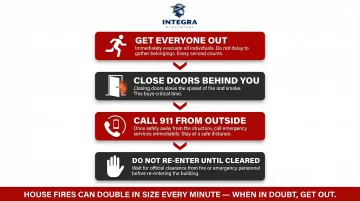
House fires can double in size every minute — when in doubt, get out and call 911. No extinguisher is worth the risk.
Frequently Asked Questions
How can electrical fires be prevented?
The core steps are:
- Avoid overloading outlets and plug major appliances directly into wall outlets
- Install GFCI outlets in wet areas and AFCI breakers in older homes
- Watch for warning signs like flickering lights or warm outlets
- Schedule a professional electrical inspection if your home is 30 years or older
What is the most common cause of electrical fires in homes?
Faulty or aging wiring and overloaded circuits are the leading causes. Older homes face elevated risk because wiring materials and panel capacity were not designed to handle modern electrical loads, making hidden deterioration a common hazard.
Can an electrical fire start if nothing is plugged in?
Yes. Faulty wiring inside walls, loose connections in the electrical panel, or deteriorating insulation can arc and ignite without any device being plugged in. In homes 30 years or older, a professional inspection is the only reliable way to catch these hidden risks before they cause damage.
Do surge protectors help prevent electrical fires?
Surge protectors guard against voltage spikes but do not prevent fires from overloaded circuits or faulty wiring. Power strips with built-in overload protection add a layer of safety, but neither replaces a properly sized electrical system.
What are 5 electrical safety tips?
Five essentials for electrical safety at home:
- Never overload outlets or daisy-chain power strips
- Plug major appliances directly into wall outlets
- Replace frayed or damaged cords immediately
- Install GFCI outlets in kitchens, bathrooms, garages, and outdoor areas
- Schedule a professional electrical inspection if your home is older than 30 years
What's the best way to stop an electrical fire?
Cut power to the source if safe, use a Class C or ABC-rated fire extinguisher for small fires, never use water (it conducts electricity), and evacuate immediately and call 911 if the fire cannot be controlled in seconds. Prioritize life over property.