If you have ever plugged something in and the power in that part of the house suddenly shut off, you are not alone. Breakers always seem to trip at the most inconvenient moments—coffee brewing. Hair dryer running. Dinner is halfway cooked. Suddenly, you are standing in front of the breaker panel, hoping for answers.
The truth is, most homeowners are never taught what a breaker actually does. So when it trips, it can feel a little confusing or even concerning. And that is completely normal.
At Integra Electrical, we help homeowners with this every day. Breakers tripping is one of the most common electrical issues out there, and in many cases, it simply means the breaker is doing its job. Our goal is to explain why it happens in a calm and clear way, without electrical jargon.
Before the end of this article, you will know:
- What a breaker actually does
- The most common reasons breakers trip
- What you can safely check yourself
- When to call an electrician
What Your Breaker Actually Does
A breaker is a built-in safety device. Every circuit in your home has a set amount of electrical power it can handle safely. The breaker’s job is to watch that flow. If the demand goes past what the circuit can safely carry, the breaker shuts the power off to prevent overheating.
This is important because overheated wiring can cause damage inside the walls. So when a breaker trips, it is not a malfunction. It is the breaker stepping in to prevent something worse.
In other words, the breaker is doing exactly what it is supposed to do. The real question is: what caused it to need to step in?
The Most Common Reasons Breakers Trip
Most breaker trips come down to a few everyday situations. Here are the big ones:
1. Too Many Things Are Running on the Same Circuit
This is the most common cause. For example, the microwave, toaster, and coffee maker are often on the same kitchen circuit. When they run together, they pull more power than that circuit is designed to handle. The breaker steps in and shuts it down.
2. A Device Is Pulling More Power Than It Should
Sometimes the issue is not “too many things” but one single thing that is struggling. A space heater, hair dryer, or older appliance can take more power than usual when it is failing internally. When that happens, the breaker trips because the power demand is suddenly higher than normal.
3. Something Is Damaged or Loose
Wiring inside an outlet, switch, or the device itself can loosen over time. When the connection is not solid, electricity does not flow smoothly. The breaker senses the irregular flow and turns off the circuit to prevent overheating. This does not mean there is an emergency, but it is something worth checking.
What You Can Safely Check Yourself
Before calling anyone, there are a few simple things you can look at:
1. Reset the Breaker Fully
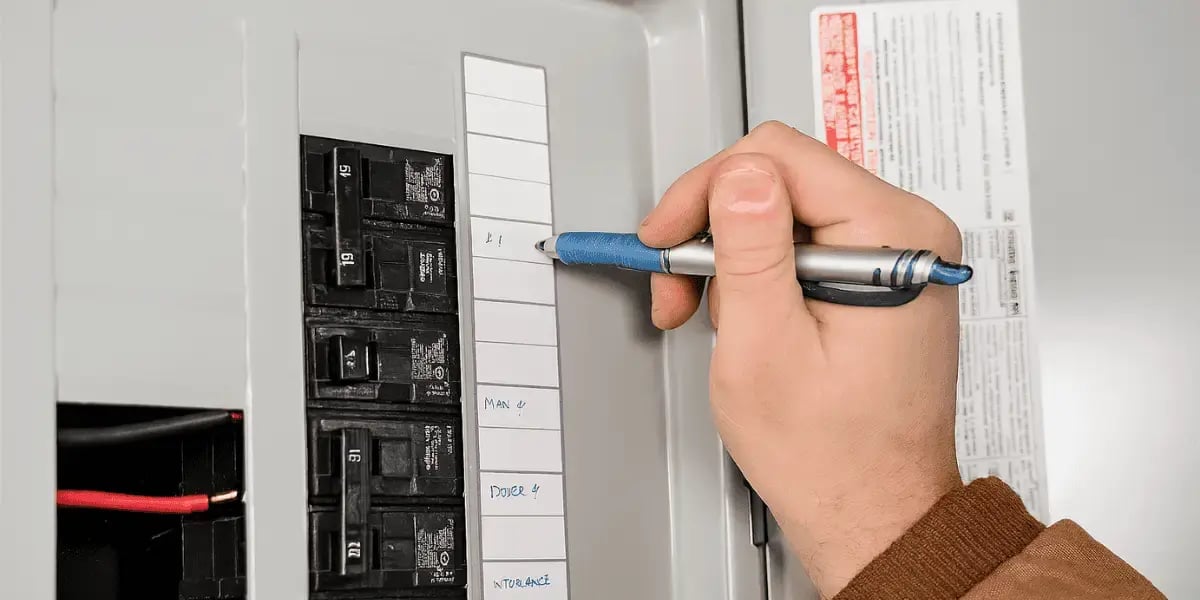
When a breaker trips, the switch usually sits in the middle. To reset it, push it fully to the OFF position first, then back to ON. If it clicks on and stays on, you are good for now. If it trips again right away, move to step two.
2. Look at What Was Running When It Tripped
Think back to what was on at the time. Were you using multiple high-demand appliances together? If so, try splitting them up. For example, microwave now, coffee maker after. If changing how you use things solves it, then it was simply too much load on that circuit.
3. Unplug Anything That Might Be Struggling
If the breaker keeps tripping even after you spread things out, unplug anything that could be pulling more power than it should. Space heaters, older vacuums, hair dryers, and certain countertop appliances are common culprits. Try resetting the breaker again once they are unplugged.
If the breaker still trips, that is usually a sign there is something deeper going on in the wiring or the circuit itself. At that point, it is best not to keep flipping it. Breakers are trying to tell you something.
When It Is Time to Call an Electrician
If the breaker keeps tripping even after you:
- Reset it fully
- Spread out what is plugged in
- Unplug anything that might be struggling
Then it is time to have an electrician take a look. A breaker that continues to trip is a sign that the circuit is being pushed past what it can safely handle, even during normal use. That can mean:
- The wiring on that circuit is older or worn
- An outlet or switch connection is loose inside the wall
- The breaker itself is wearing out
- The home simply needs more circuits than it currently has
None of these are things you can see just by looking at the panel. And there is no benefit in repeatedly flipping the breaker back on. If it is trying to tell you something, let’s listen to it.
If this is happening in your home, we can come out, run a few simple tests, and explain exactly what is going on in plain language. Just schedule a time that works best for you, and we’ll help you figure out what’s going on.
FAQs
Is it bad if my breaker keeps tripping?
It is not dangerous by itself, but it is a sign that something needs attention. The breaker prevents overheating. The cause is what we need to figure out.
Can I just install a bigger breaker?
No. A bigger breaker would allow more power than the wiring can safely handle, which can overheat the wires. Always match the breaker to the wiring. If more power is needed, the circuit needs to be upgraded, not the breaker size.
Do older homes trip more often?
Yes, especially if the electrical system has not been updated. Older homes were not built for the amount of appliances and devices we use today.
Dustin Ober is a licensed electrician on Integra’s installation team. Born and raised in Iowa, he brings four years of licensed experience and five years of dedication to the Integra family. Known by customers as professional and helpful, Dustin is dependable and always shows up ready to help. When he’s not working, you’ll likely find him outdoors—enjoying the same steady calm he brings to every job.
Topics: