

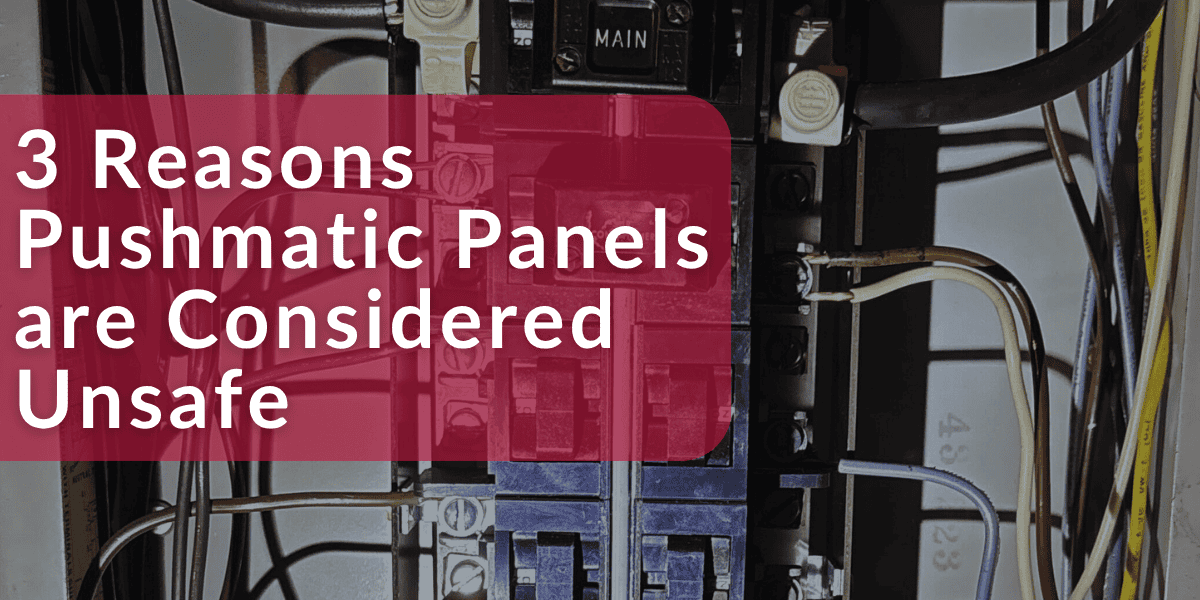
So your electrician told you that you have a Pushmatic panel.
That probably left you wondering, “Okay… is that good or bad?” Here’s the short answer: Pushmatic panels are outdated, and they’ve built a reputation for being unreliable when it comes to protecting a home from electrical problems. Most licensed electricians consider them one of the more concerning panel types still found in homes today, especially when compared to modern safety standards.
At Integra Electrical, we’ve seen these panels cause more issues than most homeowners expect, especially in older homes throughout Iowa. Breakers that won’t reset, power that cuts out without warning, and equipment that doesn’t trip when it should are all common. That’s why electricians flag them during an inspection: not to scare anyone, but to help homeowners understand the risks and what they could mean for their safety.
The top 3 problems with Pushmatic panels are:
- Breakers That Stick and Fail to Trip
- Breakers That Falsely Indicate They’re Off
- Limited Parts and Maintenance Challenges
Pushmatic Breakers Stick and Fail to Trip
Pushmatic panels use a push-button style breaker instead of the familiar flip switch found in modern panels. Over time, those buttons can become stiff and harder to operate as internal components wear down from repeated heating and cooling. What once moved easily can start to feel inconsistent or unresponsive.
The problem is that a sticky breaker isn’t just frustrating; it can affect how reliably the breaker performs its main job. When a circuit pulls more electricity than it should, the breaker is supposed to shut things down before wires overheat. If the mechanism doesn’t respond properly, the system may continue running under unsafe conditions, increasing the risk of overheating or damage behind the walls.
Homeowners often first notice this when a breaker feels stubborn, won’t reset smoothly, or requires more force than expected. It can seem like a small annoyance at first, but it’s often a sign that the breaker may not react as quickly or consistently as it should when it matters most.
Breakers That Falsely Indicate They're Off
Most people assume that when a breaker is switched off, the power is cut and it’s safe to work on. Unfortunately, that’s not always the case with Pushmatic panels. These breakers have been known to appear off while still carrying live electricity.
That creates a dangerous false sense of security. A homeowner, or even someone doing basic work around the house, might open a circuit thinking it’s safe, only to find out that power is still present. Situations like this increase the risk of electrical shock and make even simple tasks more hazardous than expected.
Breakers are meant to be a reliable safety barrier between you and live electricity. When their position doesn’t match what’s actually happening inside the panel, it removes a layer of protection people depend on without realizing it.

Pushmatic has Limited Parts & Maintenance
Pushmatic panels haven’t been manufactured for decades, which means replacement parts are difficult to find. If a breaker fails, it’s rarely a simple fix. Available parts are often refurbished, inconsistent in quality, or expensive due to limited supply.
This puts homeowners in a difficult position. Instead of installing new, reliable components, electricians may have to track down used parts just to keep the panel functioning. It’s similar to maintaining an older system where the core technology is no longer supported. If you’re researching older electrical systems, you may also want to review our guide on the top 6 electrical panels that could be putting your home at risk to see how Pushmatic compares.
The result is that repairs tend to take longer, cost more, and still don’t bring the panel up to modern safety expectations. In many cases, homeowners end up investing in temporary fixes instead of a long-term solution.
What Should You Do If You Have a Pushmatic Panel?
Pushmatic panels come with known limitations. Breakers can become unreliable, there’s often no main shut-off, and replacement parts are increasingly difficult to source. These issues don’t always cause immediate problems, but they do increase the chances of unexpected failures over time.
If you’ve been told you have a Pushmatic panel, the most important first step is understanding what that means for your specific home. Some homeowners choose to monitor the panel closely, while others plan for an upgrade to avoid future issues, especially if they’re already noticing warning signs like stiff breakers or inconsistent power.
To get a clearer idea of what replacement could look like, including potential costs, try our Panel Upgrades Calculator. It’s a simple way to explore your options and understand what may be involved, so you can make a confident decision without pressure. If you’d rather talk it through with an electrician, you can also schedule an inspection to get a clear recommendation for your home.
Frequently Asked Questions
Are Pushmatic panels illegal?
No, they’re not illegal. However, they are considered outdated and are often flagged by electricians during inspections due to their age and known limitations. In some cases, insurance companies or home inspectors may raise concerns, which is why many homeowners choose to plan for replacement rather than rely on repairs long-term.
How do I know if I have a Pushmatic panel?
You can usually identify them by the push-button style breakers instead of standard toggle switches. The panel door may also have “Pushmatic” labeled on it, and they’re most commonly found in older homes built several decades ago.
Do all Pushmatic panels need to be replaced?
Not every panel fails at the same rate, but they all share the same aging design and limited part availability. Because of that, many homeowners choose to plan ahead for replacement rather than wait for a failure, especially if the panel is already showing signs of wear.
What happens if a Pushmatic breaker doesn’t trip?
If a breaker fails to trip, it can allow too much electrical current to flow through the wiring. Over time, this can lead to overheating, potential damage to appliances, or more serious electrical issues within the home if the problem goes unnoticed.
