

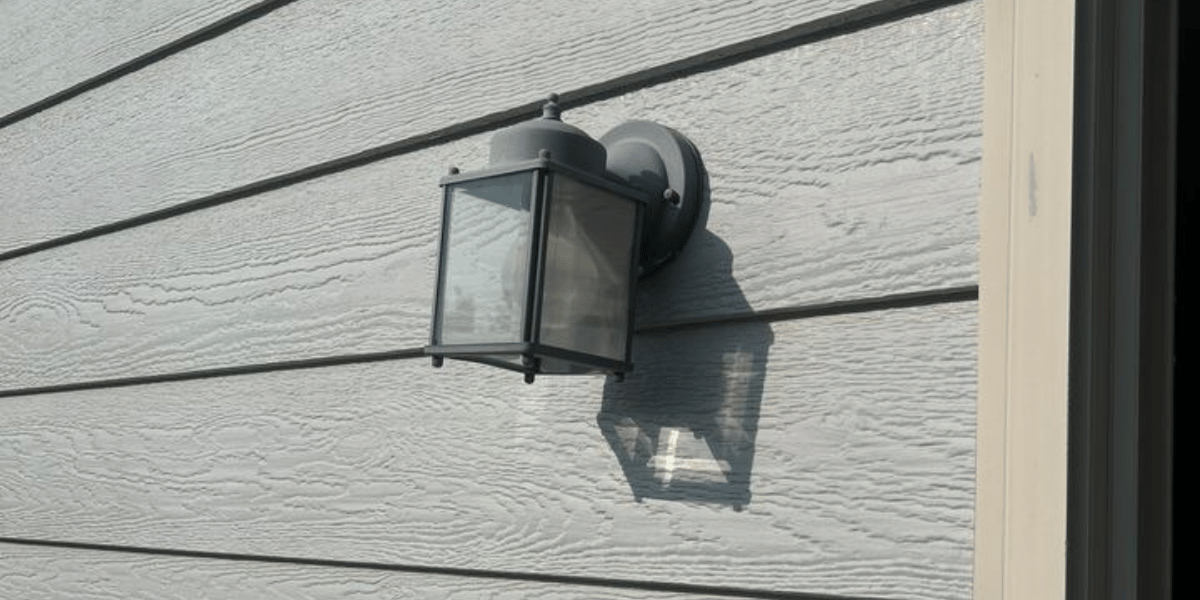
You bought an older home because it has personality. The porch has stories. The brick feels solid. But once the sun goes down, that charm disappears into darkness and uncertainty. Most homeowners start thinking the same things: Is this lighting even safe? Why does everything feel dim and dated? And am I supposed to install something myself or just pretend the shadows are “historic”?
At Integra Electrical, we work on older Iowa homes every day. We have seen beautiful entryways ruined by bright blue bulbs, DIY solar lights that give off the strength of a dying firefly, and security floods that make a backyard look like a prison break. We know what lasts, what fails, and what actually makes an older home feel warm and safe at night instead of spooky.
The five best types of outdoor lighting for older homes is:
- Warm tone LED porch lighting
- Low-voltage landscape path lighting
- Motion-activated security lighting
- Accent lighting for architectural features
- Smart-controlled exterior lighting
Warm Tone LED Porch Lighting
Older homes do their best work in warm light. It softens brick, flatters painted trim, and makes the whole entry feel like a welcome instead of a warning. When homeowners picture LEDs, they often imagine that cold, blue supermarket glow. But modern warm-tone LEDs sit in a range that looks more like candlelight than a convenience store.
Think of color temperature like coffee strength. You do not need jet-fuel espresso for your porch. You want something smooth and inviting. Warm LEDs make older homes look intentional without burning energy or mixing random bulb colors. And unlike incandescent bulbs that run hot and burn out like flip phone batteries, LEDs last for years.
One myth worth burying: brightness does not fix bad placement. Slapping in the highest watt bulb is not a lighting plan. It is the electrical version of yelling your order at a drive-through speaker. A properly placed warm LED on your porch gives you safety, visibility, and curb appeal without turning your doorway into a runway.
Low Voltage Landscape Path Lighting
Older homes were not built with today’s walkways, additions, or side-yard foot traffic in mind. After dark, that charming garden path can feel like an obstacle course. Low voltage lighting fixes that without overwhelming the house or your neighbors. Think of it like installing a polite guide instead of a spotlight interrogation team.
Because low voltage draws less power, it is gentler on older electrical systems that may already be working near their capacity. You get enough light to see steps, uneven pavers, or curious tree roots without blasting light into nearby windows. And low voltage systems are easy to service and expand.
We should also call out one of the most common product mistakes: those bargain-bin solar stakes that are supposed to “light the way.” Most offer the output of a glow stick at a middle school dance. They fade fast, turn weird colors, and cannot compete through an Iowa winter. If your lighting only works on sunny days when you do not need it, that is not lighting. It is décor.
Motion Activated Security Lighting
Security lighting does not have to turn your backyard into a prison yard. When it is done right, motion lighting works more like a polite guard dog. It stays quiet until something (or someone) wanders into the space, then it speaks up with light. That short burst is usually enough to stop a trip hazard, discourage a stranger, or remind a raccoon that tonight is not buffet night.
Many older homes already have tight electrical loads, so adding a billion-watt floodlight is not a solution. More brightness does not equal more safety. It just means more glare and more complaints from the neighbor whose bedroom window now looks like a police spotlight. A smartly placed motion fixture near garage doors, driveways, or backyard access points gives you awareness without punishment.
And please ignore the DIY advice that claims you can zip-tie any motion light to a gutter and call it “installed.” Security lighting needs proper mounting and wiring so it responds correctly and shuts off when it should. Otherwise, you end up with a motion light that flips on every time a moth has an opinion.
Accent Lighting for Architectural Features
Older homes already have character built in. Columns, stonework, decorative trim, even an old brick chimney can look incredible at night with the right touch of light. Accent lighting is less about blasting brightness and more about giving these details a little “stage lighting.” Think of it like eyebrows on a face. They do not make the whole look, but without them everything feels unfinished.
Accent lights work best when they aim upward or downward in a soft wash. They are not trying to advertise to passing airplanes. They are simply giving shape and dimension in the dark. One well-placed uplight on stone or siding can make an older home feel maintained instead of forgotten.
A common myth is that accent lighting is only for fancy remodels or new builds. Not true. Older homes usually benefit the most because they have real craftsmanship worth showing off. And you do not need a hundred fixtures to get results. Two or three accents can make your home exterior look curated instead of shadowy.
Smart Controlled Exterior Lighting
Smart lighting sounds like something meant for new construction or people who have an app for everything. In reality, it is one of the easiest upgrades for older homes because it does not require a full electrical overhaul. You are not rewiring the neighborhood. You are simply adding control. Timers, dusk sensors, Wi-Fi switches, or small plug-in controllers let you automate when the lights come on and when they go off.
Think of smart control like cruise control in a car. You are still driving. You are still in charge. You are just letting a small piece of technology handle the boring part so you do not forget and leave your porch light burning all night. It saves energy, keeps your exterior looking lived-in while you are away, and prevents those “I forgot to turn the lights on before I left” moments.
And let us call out another myth. Smart does not mean fragile. The right exterior-rated fixtures and controls handle Iowa winters, humidity, and heat just fine. What does not hold up? Cheap bulbs and off-brand gear that promise everything and deliver less than a gas-station sandwich. A smart setup paired with solid outdoor fixtures gives older homes convenience and consistency without changing the bones of the house.
Next Steps
If you are thinking about outdoor lighting, the easiest place to start is understanding what makes sense for your home and budget. You can take a walk around your property at night and picture where light would help, but the real clarity comes from knowing what people typically spend and why prices vary. If you want a simple breakdown without any pressure, you can read our article on the cost of outdoor lighting whenever it works for you. It will help you compare options, understand what drives pricing, and decide what feels right for your home.
Outdoor Lighting Questions
How long does outdoor lighting usually last?
Quality outdoor fixtures can last for many years, and LEDs often run for tens of thousands of hours. Cheap bulbs and flimsy housings are usually what fail early.
Can outdoor lighting be added without rewiring the whole house?
Often yes. Many upgrades use existing power, low voltage systems, or smart controls that avoid major electrical work. The key is making sure the wiring you already have is safe.
Does outdoor lighting increase my electric bill?
LEDs use so little energy that most families barely notice a difference, especially when paired with sensors or timers that prevent wasted run time.
Dustin Ober is a licensed electrician on Integra’s installation team. Born and raised in Iowa, he brings four years of licensed experience and five years of dedication to the Integra family. Known by customers as professional and helpful, Dustin is dependable and always shows up ready to help. When he’s not working, you’ll likely find him outdoors—enjoying the same steady calm he brings to every job.
