

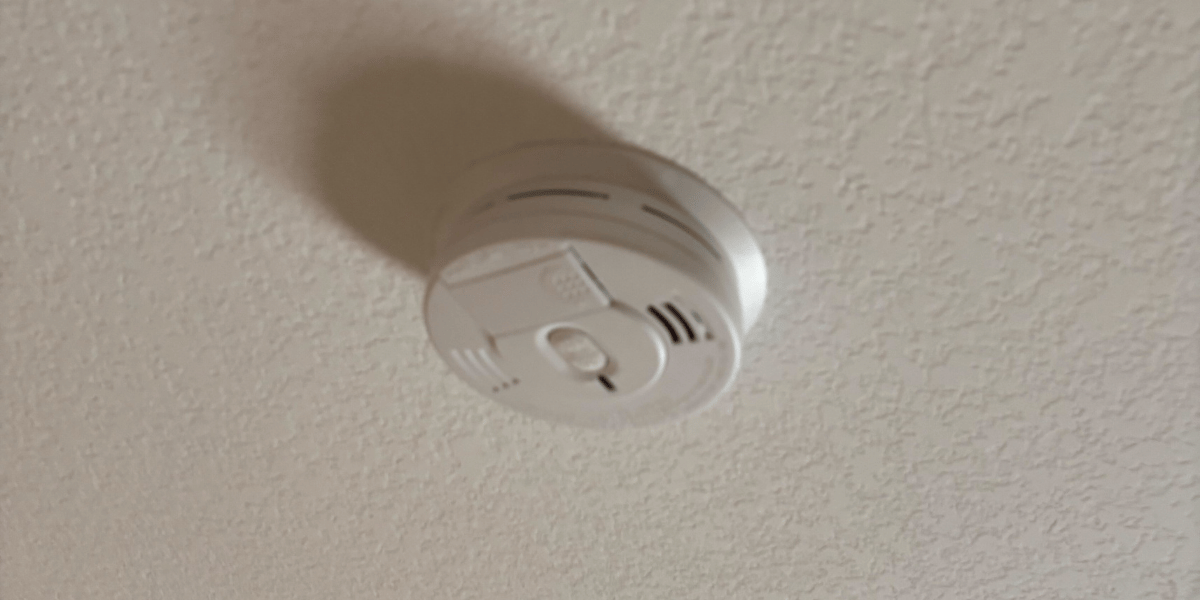
Most homeowners hear the phrase life safety system and think it sounds important, but also a little vague. It feels like one of those terms you are supposed to understand without ever being given a clear explanation. If you have nodded along while quietly wondering what it actually means, you are not alone.
Before the end of this article, you will know:
- What a life Safety System is
- The different types of smoke and carbon monoxide detectors and how they protect your home
- Where life safety devices are required in Iowa homes and why placement matters
What Is a Life Safety System?
A life safety system sounds complicated. It really is not.
It’s just smoke detectors and carbon monoxide detectors.
When we use the term life safety system, we are grouping those two devices together because they serve the same purpose: giving you an early warning when something dangerous is happening in your home.
The word system can trip people up. It makes it sound complex, but it simply refers to how these devices work together. Smoke detectors and CO detectors watch for different threats, but they share the same job. They alert you early enough to react while you still have good options, especially when you are asleep or your home is quiet.
Think of them less like firefighters and more like a very persistent friend who refuses to let you sleep through a bad situation. They are not there to fix the problem. They are there to give you time, which is often the most important thing in an emergency.
These are not exciting devices. No one has ever given a house tour and said, “And this is my favorite smoke detector.” But they are the only things in your home designed to wake you up before a bad day turns into a very bad headline.
The Types of Smoke and CO Detectors (And Why It Matters)
Not all smoke and carbon monoxide detectors work the same way. From the outside, they can look identical, which is why many homeowners assume one is as good as another. The real differences are not about appearance. They are about how reliably you get warned when something is wrong.
Basic battery-powered detectors are the most common. They are affordable, easy to install, and better than nothing. The downside is consistency. They rely on someone remembering to change batteries and reinstall them after they chirp, which is why so many alarms mysteriously disappear from ceilings.
Hardwired detectors are connected to your home’s electrical system and usually include a battery backup. They stay powered even if the battery is weak or the power goes out. This makes them more reliable day to day and a standard feature in newer homes.
Interconnected detectors are where the word “system” really earns its place. When one detector senses smoke or carbon monoxide, all of them sound at the same time. A problem in the basement or near a furnace does not help you much if the only alarm is yelling to an empty room.
Think of it like this. One detector going off is someone shouting down a hallway. Interconnected detectors are the entire house yelling at once, which is exactly what you want when seconds matter.
Where Are Life Safety Systems Required in Iowa Homes?
Iowa has clear rules about where smoke and carbon monoxide detectors must be installed, but the language in the code can feel heavier than it needs to be. Here is the plain-English version.
Smoke detectors are required inside every bedroom, outside sleeping areas like hallways, and on every level of the home. That includes basements, even if they are unfinished. Fires do not care whether a space is “finished” or not.
Carbon monoxide detectors are required outside sleeping areas and on each level of the home when there is a fuel-burning appliance present. That can include gas furnaces, water heaters, fireplaces, or attached garages. Carbon monoxide is sneaky. You do not smell it. You do not see it. You just feel tired, and then things get dangerous.
These requirements are the minimum. They are meant to create a baseline level of safety, not a perfectly protected home. That is why many older homes technically meet code but still leave gaps, especially when detectors are outdated, missing, or not interconnected.
Think of code like a seatbelt law. Wearing one is required, but how well it fits and whether it actually works still matters. Placement, condition, and type all play a role in whether your life safety system does its job when it needs to.
That is why understanding what you have, and where it is installed, matters just as much as checking the box that says “installed.”
Next Steps
If you are not sure what type of detectors you have, where they are located, or how old they are, that is completely normal. Most homeowners only think about these devices when they chirp or go off, which is not the best time to start asking questions.
Taking a few minutes to understand your life safety system can bring real peace of mind. And if you would like a professional to walk through it with you, explain what you have, and point out any gaps, you can schedule service at a time that works for you. That conversation is about clarity, not pressure. The goal is simple: making sure the warning reaches you when it matters most.
Frequently Asked Questions
How long do smoke and CO detectors last?
Most smoke detectors last about 10 years. Carbon monoxide detectors usually last 5 to 10 years, depending on the model. After that, the sensors become less reliable, even if the device still powers on. If your detector has a manufacture date older than your last phone upgrade, it is probably time.
Can different types of detectors be mixed in the same home?
Yes, but it is not ideal. Mixing battery-powered, hardwired, and non-interconnected devices can create gaps in warning. The system is only as strong as the weakest alarm, and that weakest one is often the one you cannot hear at 2 a.m.
Why do newer homes seem to have more alarms than older homes?
Standards have improved as we have learned more. Older homes were built when fewer detectors were required, and interconnected systems were not common. The house did not do anything wrong. The expectations just changed.
Daniel Carpenter is a licensed electrician on Integra’s installation team. He got his license at just 19, but he's been around the trade his whole life. With five years on the job and a heart for helping homeowners, Daniel takes pride in doing quality work that serves the local community.
