

What Is a Gould Panel and Why Electricians Recommend Replacing It
February 14th, 2026
4 min read
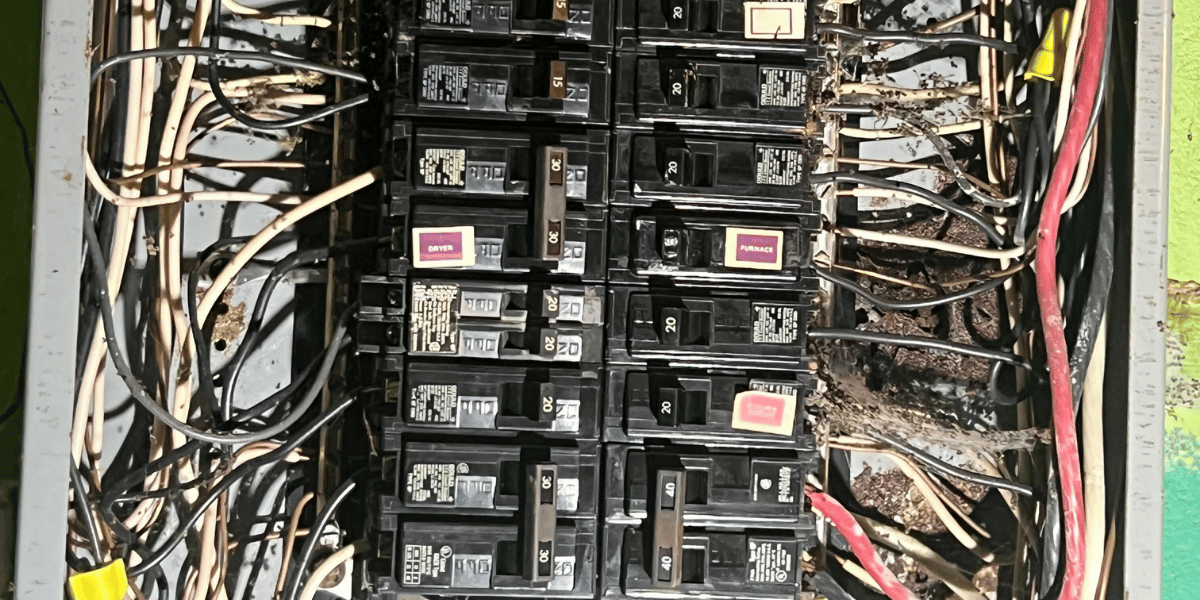
Your electrician says, “You have a Gould panel.”
You nod like that means something. Inside, you are probably thinking, “Okay… should I care about that?” The lights work. Nothing smells weird. Your house is not on fire. So why did this suddenly become a conversation?
That reaction is completely normal. Most homeowners have never heard of a Gould panel until someone points it out, and there is usually no obvious problem screaming for attention.
Electricians flag Gould panels because of how they fail, not how they look. They can seem perfectly fine right up until the moment they are supposed to protect your home and they do not. That is why this topic comes up even when everything feels okay.
Before the end of this article, you will know:
- What a Gould panel actually is
- Why Gould panels are considered dangerous
- What to do if your home has one
What Is a Gould Panel?
A Gould panel is an older electrical panel commonly found in homes built or updated between the 1960s and early 1980s. When they were installed, they were considered perfectly acceptable. No one thought they were installing a future problem.
Your electrical panel is the control center for your home’s power. It sends electricity where it needs to go and steps in when something is not right. That safety role is what really matters here.
The concern with Gould panels is not their age. It is how the breakers inside them tend to behave over time. These breakers have a history of not tripping when they should, which means electricity can keep flowing even when things are overheating behind the scenes.
Most Gould panels look totally normal from the outside. No drama. No warning signs. That is why they can fly under the radar. Think of it like a smoke alarm that looks fine on the ceiling but may not make a sound when there is smoke.
That track record is why electricians pay attention when they see a Gould panel, even if your home feels just fine.
Why Gould Panels Are Considered Dangerous
The biggest issue with Gould panels comes down to one job they are supposed to do, and sometimes do not. Shut things off when there is a problem.
Inside your panel are breakers. Their whole purpose is to trip when wires start carrying more electricity than they safely can. When a breaker trips, it is not being annoying. It is protecting your home. It is like a seatbelt. You do not think about it until the moment you really need it.
Gould breakers have a history of failing to trip under dangerous conditions. That means wires can overheat while the breaker just sits there, acting like everything is fine. Over time, that extra heat can damage wiring, insulation, and connections. This is how fire risks quietly build without any obvious warning signs.
What makes this especially frustrating is that you usually cannot see the problem. The panel can look clean. The breakers can feel solid. Nothing smells burnt. It is like a pressure cooker with no gauge. Everything seems calm until it suddenly is not.
This is why electricians take Gould panels seriously. Not because every one has already failed, but because enough of them have failed in the same way to raise real concern. When a safety device has a known habit of not doing the safety part, it is worth paying attention.
What To Do If You Have a Gould Panel
First, take a breath. Finding out you have a Gould panel does not mean your house is about to burst into flames or that you need to panic call anyone before lunch.
It does mean this is something worth addressing thoughtfully.
Because the issue with Gould panels is how they fail internally, repairs are usually not the right solution. Swapping a breaker or tightening a connection does not change the core problem. It is like replacing one worn tire on a car with bad brakes. You might feel better for a minute, but the real risk is still there.
That is why electricians typically recommend replacement rather than repair. A modern panel is designed to shut power off reliably when something goes wrong. That reliability is the whole point of having a panel in the first place.
An inspection can help confirm what you have and explain your options clearly. Not every home looks the same, and replacement timing depends on your panel condition, usage, and future plans for the house. The goal is not to rush you. It is to give you enough information to make a decision that feels right.
Most homeowners choose to replace a Gould panel for peace of mind. Not because something is actively failing, but because they would rather not wait around to find out what happens when it does.
Next Steps
If you have a Gould panel, the next step is not panic. It is clarity.
A professional inspection can confirm exactly what you have, explain what condition it is in, and walk you through your options without pressure. You get real information instead of guesses or internet horror stories. From there, you can decide what makes sense for your home, your timeline, and your budget.
If you want answers from a licensed electrician who works in older homes every day, you can schedule service and have your panel looked at in person. Even if you are not ready to make a decision yet, knowing what you are dealing with is a solid place to start.
FAQs
How do I know if I have a Gould panel?
The name “Gould” is usually printed on the panel door or inside the panel. If you are not sure, an electrician can identify it quickly during an inspection.
Is every Gould panel dangerous?
Not every Gould panel has failed. The concern is that they have a known history of breakers not tripping when they should. That risk exists even if everything seems fine today.
Can a Gould panel be repaired instead of replaced?
In most cases, no. The issue is tied to the design and reliability of the breakers themselves. Replacing individual parts does not remove the underlying safety concern.
If nothing is wrong, do I really need to do anything?
This is a prevention issue, not a reaction issue. Many homeowners choose replacement before a failure happens, similar to replacing worn tires before a blowout.
Is this something that needs to be fixed immediately?
Usually, no emergency sirens are required. But it is something you should plan for rather than ignore. An inspection helps determine timing and options.
Why do electricians bring this up if it is not actively broken?
Because electrical panels are safety devices. When a safety device has a history of not doing its job, it is worth talking about, even when everything appears normal.
Daniel Carpenter is a licensed electrician on Integra’s installation team. He got his license at just 19, but he's been around the trade his whole life. With five years on the job and a heart for helping homeowners, Daniel takes pride in doing quality work that serves the local community.
