

What Does Discoloration in Your Electrical Panel Mean?
March 3rd, 2026
4 min read
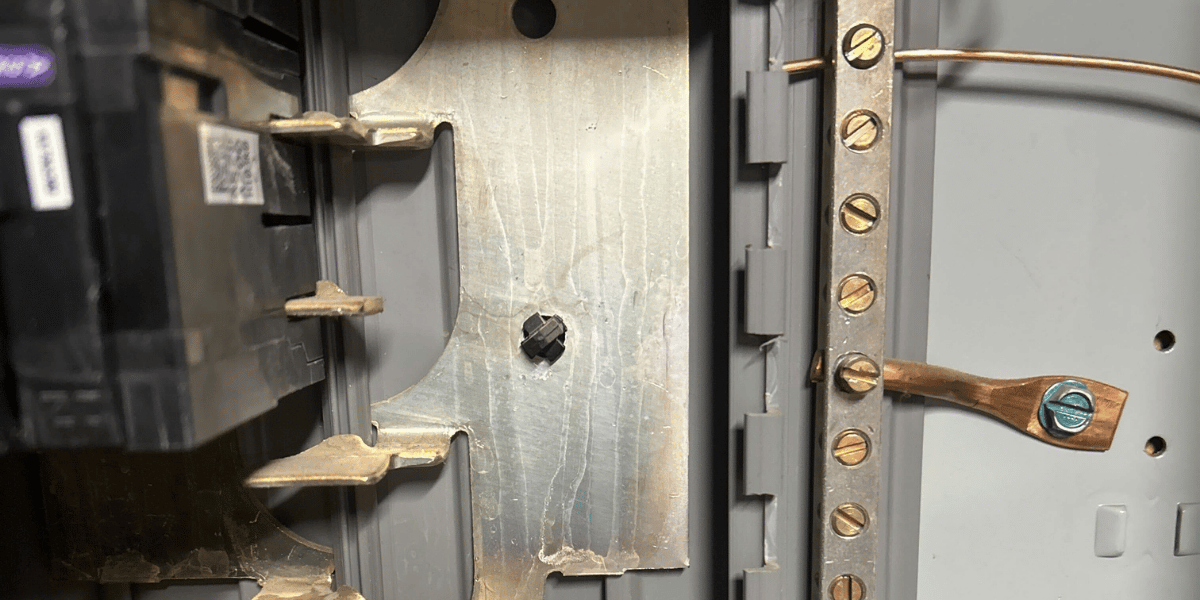
An electrician just told you there is discoloration in your electrical panel. You look at it. It is a little brown. Maybe a little dark around a breaker. And your first thought is… okay? Lots of things discolor. Bananas discolor. Old Tupperware discolor. Your favorite white shirt after one spaghetti incident is definitely discolored. That does not automatically mean danger. So why should this be different? And now you are stuck wondering if this is something serious or just another thing in your house that looks a little weird but works fine.
At Integra Electrical, we see panel discoloration in homes across the Des Moines and Indianola area all the time. Sometimes it is minor aging. Sometimes it is your electrical system telling you something is overheating or breaking down. The hard part is knowing which is which, and when the box designed to protect your home may not be doing its job anymore. Our goal is to help you understand what you are seeing so you can make a confident decision about your home and the people in it.
Before the end of this article, you will know:
- What discoloration in your panel actually means
- When discoloration becomes a real safety issue
- What it typically costs to fix and what to do next
What Causes Discoloration in an Electrical Panel?
Let’s clear something up.
Electrical panels are not supposed to change color.
When parts inside your panel turn brown, black, or chalky green, it usually means one of two things is happening. Too much heat. Or moisture where it does not belong.
And your panel only changes color when it has been under stress.
Overheating from Loose Connections
Electricity needs tight, secure connections to flow safely. When a connection loosens, electricity meets resistance. Resistance creates heat. Heat changes the color of metal and plastic over time.
It is basically electrical friction.
And friction plus electricity is like arguing while holding a blowtorch. Nothing good comes from it.
This is one of the most common causes of brown or dark marks around breakers.
Overloaded Circuits
Homes today use far more power than they did decades ago. Space heaters. Air fryers. Home offices. That outlet with six things plugged into it because “it’s probably fine.”
When a circuit is pushed past what it was built for, it heats up repeatedly. That repeated strain slowly leaves marks inside the panel.
It is like making one extension cord power your entire house. Technically possible. Absolutely not wise.
Moisture and Corrosion
If you see green, white, or crusty buildup, moisture may be getting inside the panel.
Water and electricity are not dramatic enemies. They are quiet destroyers. Corrosion weakens connections and creates unstable electrical flow. Over time, that instability creates heat and damage.
And here is the part that really matters.
Your electrical panel is the safety system for your entire home. Its job is to shut things down before wires overheat and before problems turn into fires. If the box responsible for protecting your family is showing visible signs of stress, that deserves attention.
You are not overreacting by caring about it.
You are being a responsible homeowner.
When Is Discoloration in Your Panel Dangerous?
In most cases, discoloration in an electrical panel is not harmless.
Panels do not change color for fun. When something turns brown, black, or looks scorched, it usually means heat or moisture has been present. Minor aging can happen, but most dark marks mean the system has been under stress.
Here is when it becomes serious.
Scorch Marks or Melted Areas
If a breaker or wire looks burnt or melted, overheating has already happened.
Not “might.” Already.
Heat can damage a breaker so it no longer shuts off power when it should. That is like having a fire extinguisher that only works sometimes. It looks reassuring on the wall, but you would not want to test it in an emergency.
A Burnt or Hot Plastic Smell
Electricity should not smell like anything. If you notice a burning or hot plastic odor near your panel, something inside is overheating.
Breakers That Trip Repeatedly
One trip occasionally is normal. Repeated tripping, especially near discolored areas, usually signals ongoing stress.
Your system is warning you.
The Panel Feels Warm
Your panel should feel like the wall around it. If it feels warm or hot, electricity is not flowing safely inside, and that heat damages protective components over time.
Your electrical panel is designed to prevent dangerous problems before they start. When it shows visible signs of stress, its ability to protect your home can be reduced.
That is why discoloration should never be ignored.
What Does It Cost to Fix Discoloration in a Panel?
The cost depends on why the discoloration happened and how early the problem is caught.
If the issue is small, like a loose connection or a damaged breaker, the fix is usually straightforward.
- Tightening a connection or replacing a breaker: about $150 to $400
- Repairing damaged wiring inside the panel: about $300 to $800
- More involved panel repairs: about $500 to $1,500
- Full panel replacement (if damage is widespread): typically $4,000 to $7,000 or more depending on the home
If an inspection reveals additional electrical issues beyond the discoloration like outdated wiring, multiple failing breakers, or a panel that can no longer handle your home’s power needs, the price may increase. The discoloration is sometimes just the visible clue that led to finding a larger problem.
Here is the honest part.
Discoloration is usually cheaper to fix when it is caught early. Heat damage spreads over time. What starts as one stressed connection can affect nearby components, turning a simple repair into a bigger project.
It is a lot like ignoring a small leak under your sink. Easy fix at first. Much bigger situation later.
The goal is not to jump straight to the biggest repair. The goal is to find out what is actually happening and fix only what needs fixing.
Next Steps
If you have noticed discoloration in your panel, or an electrician has pointed it out, the worst thing you can do is ignore it and hope it is nothing.
You do not need to panic. But you do need clarity.
Discoloration is usually a sign that something inside your electrical system has been under stress. Sometimes the fix is small. Sometimes it reveals a larger issue. The only way to know is to have it properly evaluated.
Do not remove the panel cover yourself or poke around inside. Electrical panels are not a DIY project.
The safest next step is to schedule service so a licensed electrician can inspect the panel, test the breakers, and give you a clear answer.
You deserve to know your electrical system is protecting your home the way it should.
FAQs
Is all discoloration dangerous?
Not always, but most discoloration is caused by heat, damage, or moisture and should be inspected to confirm it is safe.
Can I still use my electrical panel if it looks burnt?
You should have it evaluated as soon as possible. Burn marks usually mean overheating has already occurred.
Can I check inside the panel myself?
No. Electrical panels can be dangerous to open. A licensed electrician should inspect it safely.
What it typically costs to fix and what to do nextDyllan has over a year of experience in the electrical field and is passionate about helping his team and customers succeed. He’s motivated by seeing everyone grow and thrive together. Outside of work, he’s a husband and proud father of two who loves spending time with his kids. Dyllan enjoys serving homeowners and building meaningful connections through every interaction.
