

Does Your Electrical Panel Have Corrosion? Why It Matters
February 24th, 2026
4 min read
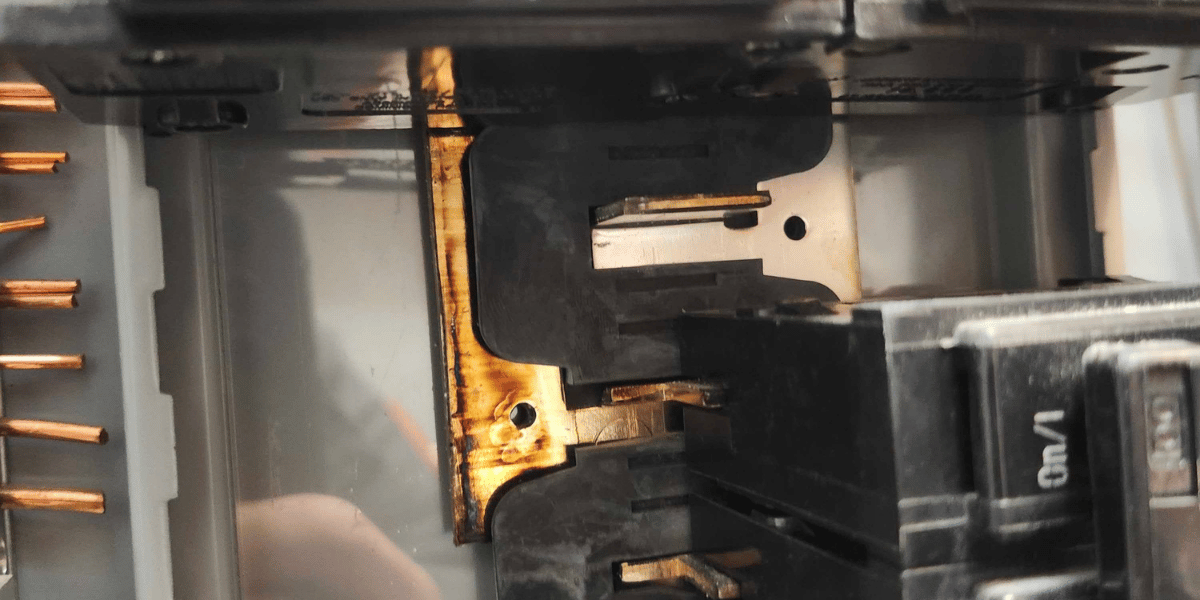
Your electrician opens the panel, takes a look, and says,
“Looks like you’ve got some corrosion in here.”
And you’re thinking… okay. So what? The lights still work. Nothing seems wrong. Why is this suddenly a concern?
Most homeowners hear corrosion and picture a little surface rust. Not exactly something that feels connected to whether your house runs safely or not.
At Integra Electrical, we see this a lot. Especially in homes 30 years or older around Central Iowa, where panels have spent decades dealing with humidity, seasonal changes, and simple wear over time. From the outside everything can look normal while the metal connections inside are slowly changing.
Your electrical system relies on clean contact to do its job. When corrosion forms, those connections do not perform the way they should. It is usually quiet. Gradual. Easy to miss. Kind of like when a battery starts to die and you pretend it is fine for way too long.
Before the end of this article, you will know:
- What corrosion in an electrical panel actually is
- Why corrosion is more serious than it looks
- What causes it and what you can do next
What Corrosion in an Electrical Panel Actually Is
Corrosion is what happens when metal reacts to moisture and air over time. It starts to break down. You might see discoloration, a white or greenish buildup, or metal that just looks… tired. Not very scientific, but honestly that is what it looks like.
Inside your panel, there are metal parts that are supposed to stay clean and tight so electricity can flow smoothly. When corrosion forms on those parts, it creates a barrier between the connection points. Electricity does not like barriers. It likes clean highways, not potholes.
Think of it like the terminals on a car battery. When they get crusty, the car suddenly struggles to start even though nothing else changed. The same idea applies here, except this is happening to the system that powers your entire home.
The tricky part is that this all happens slowly. There is no big moment where corrosion announces itself. It just builds up over years while everything appears to be working normally, until one day something does not.
Why Corrosion Is a Bigger Problem Than It Looks
Electricity needs solid, clean connections to move safely. Corrosion weakens those connections. When that happens, resistance builds up. And when resistance builds up, heat follows.
Not the kind of heat where something instantly alarms you. It is the slow, sneaky kind. The kind that quietly stresses parts, loosens reliability, and leads to those frustrating moments where a breaker trips and you think, Why is this happening again?
Here is the real concern. Your electrical panel is not just a distribution point. It is a safety device. It is supposed to control electricity and shut things down if something goes wrong. Corrosion interferes with that job. Connections that are supposed to be tight become unpredictable.
Breakers that should respond instantly can struggle. The system starts to lose the consistency it was designed to have.
It is less like a switch flipping off and more like trust slowly eroding. Everything might appear fine. Until one day it is not. And unfortunately, electrical problems rarely schedule themselves at convenient times. They love holidays. Or when you have a house full of people. Houses have a sense of humor like that.
We sometimes compare corrosion to plaque in arteries. You cannot see it. You might feel completely normal. But it is still changing how things flow. Not a perfect comparison, but it helps explain why electricians care even when there is no obvious symptom yet.
Corrosion also does not tend to stay put. Once it starts, it keeps working on those metal surfaces little by little. It does not fix itself. It does not stabilize. It just continues doing what corrosion does, which is slowly making good connections worse. Like a bad houseguest who said they were leaving an hour ago and is somehow still on your couch.
What Causes Electrical Panel Corrosion in Homes Like Yours
Most of the time, corrosion is not caused by one big event. It is the result of years of small conditions adding up.
Moisture is the biggest contributor. Panels located in basements, garages, or utility rooms are exposed to humidity changes through every Iowa season. Hot summers. Cold winters. That in between stretch where it feels like the air itself is confused. All of that creates tiny amounts of condensation over time.
Age also plays a role. Many panels we see with corrosion have been in place for decades. Materials that were perfectly fine when installed slowly react to their environment year after year. No one notices because it is happening behind a closed metal door.
Sometimes, past water intrusion is part of the story. Maybe there was a small leak years ago. Maybe the home had higher humidity before a dehumidifier was added. The panel remembers even if no one else does.
And occasionally it is simply location. A panel installed on an exterior wall or in a space without good airflow can experience more temperature swings, which encourages corrosion to form.
In other words, this is usually not about something you did wrong. It is about time and environment doing what time and environment do.
Next Steps
Corrosion is not something to ignore or “wait and see” how it goes. It does not improve with time. If anything, it continues to work against the very system that is supposed to protect your home. That is why it deserves a closer evaluation, even if everything seems to be working today.
The goal is to understand how much corrosion is present, what it is affecting, and what the smartest path forward looks like. In some cases the issue is limited and can be addressed. In others, replacement becomes the more reliable long term solution. You will not know which applies until the panel is properly assessed.
If corrosion was pointed out during a visit, this is the moment to get clear answers rather than letting it sit in the back of your mind. You can schedule service to have the panel evaluated and talk through what makes the most sense for your home.
Frequently Asked Questions
Is corrosion in an electrical panel always dangerous?
Not always immediately, but it is never something to ignore. Corrosion affects how electricity moves through the panel, and over time that can lead to overheating, unreliable connections, or component failure.
Can corrosion be fixed without replacing the whole panel?
In some cases, yes. If the corrosion is minor and has not damaged the internal parts, corrective work may be possible. If the metal components are compromised, replacement is usually the more dependable solution.
How common is this in older homes?
Very common. We see it regularly in homes that are a few decades old, especially where panels are located in basements, garages, or other areas exposed to moisture and temperature changes.
Did I do something to cause this?
No. Most corrosion is simply the result of time, environment, and location. It is rarely caused by anything a homeowner did or did not do.
Dyllan has over a year of experience in the electrical field and is passionate about helping his team and customers succeed. He’s motivated by seeing everyone grow and thrive together. Outside of work, he’s a husband and proud father of two who loves spending time with his kids. Dyllan enjoys serving homeowners and building meaningful connections through every interaction.
