

Do You Have a Challenger Electrical Panel? What You Need to Know
March 19th, 2026
4 min read
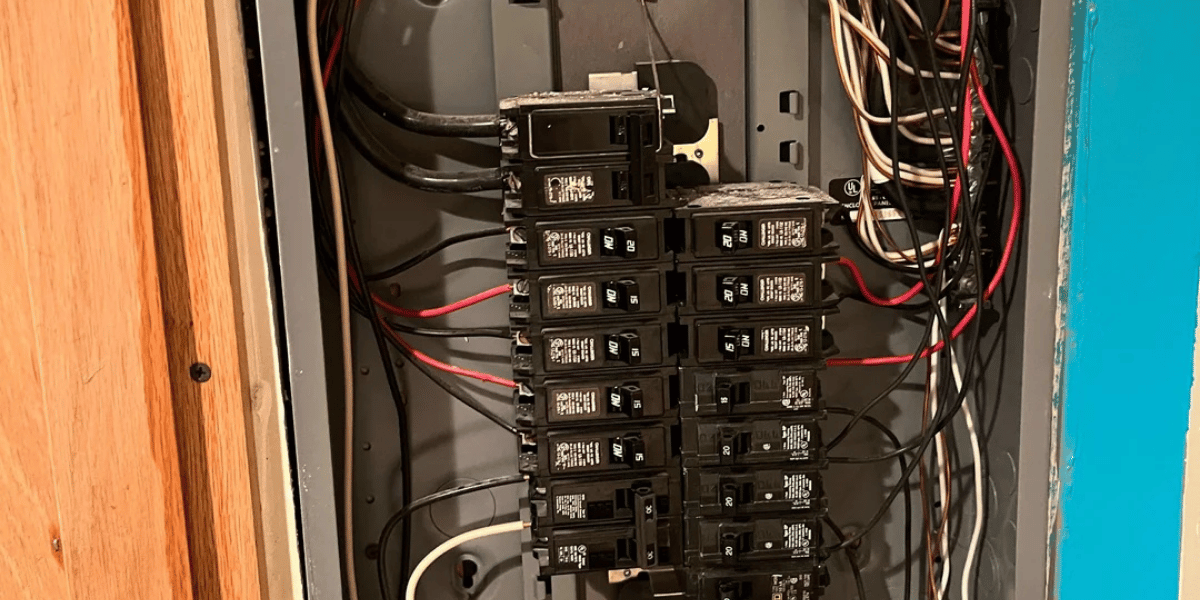
Your electrician just told you that you have a Challenger panel… and now you’re wondering why that’s even a problem.
The home was built in the 80s or 90s. That wasn’t that long ago, right?
I mean… the 90s were like 10 years ago.
Right?
So how could something from that time be considered unsafe?
At Integra Electrical, we inspect electrical panels in homes across Des Moines, Indianola, and the surrounding areas every single week. We see Challenger panels all the time. Some look completely fine on the outside. But what matters is how they perform on the inside, and that’s where things can get a little more complicated.
Before the end of this article, you will know:
- What a Challenger panel is and why homes from this era have them
- What actually goes wrong inside these panels
- Whether you need to replace your panel or not
What Is a Challenger Electrical Panel and Why Are They Still in Homes?
If your home was built or updated between the 1980s and mid 1990s, there is a decent chance you have a Challenger electrical panel.
At the time, these panels were widely used. They were not some off brand, back of a truck situation. Builders installed them in homes all over the country, including right here in the Des Moines area.
So if you have one, it does not mean someone cut corners. It just means your home was built during a time when these panels were common.
Here is the part that throws most homeowners off.
Electrical panels are built to last a long time. We are talking decades. So unless there is a clear reason to replace one, most people never think about it. It just sits there, quietly doing its job.
That is why Challenger panels are still in so many homes today. Not because people are ignoring a problem, but because nothing obvious has forced a change yet.
It is a bit like an old water heater. If it is still working, no one is rushing to replace it. It is not exactly exciting dinner conversation.
“Hey, how was your weekend?”
“Oh, great. Finally replaced my fully functional electrical panel.”
That conversation has never happened
The important thing to understand is this.
Challenger panels were normal when they were installed. The concern is not when they were put in. The concern is how some of them perform now, decades later and the risks they pose in a modern home
In some cases, that performance can create real safety risks inside your home, even if everything still seems to be working.
What Actually Goes Wrong Inside a Challenger Panel
Each breaker in your panel has one job. If too much electricity flows, it shuts things off. That is what keeps wires from melting in the walls, and ultimately stops a fire, keeping your home safe.
Some Challenger breakers have been known to fail at that job. Instead of shutting off, they keep letting electricity flow even when the circuit is overloaded.
That creates heat. Not the kind you notice. The kind that builds quietly behind the walls. It is like a safety switch that just decides to sit this one out.
There is another issue too. Behind the breakers is a metal strip that feeds power into them. Think of it like a power rail.
In these panels, connections can loosen over time. And when electricity moves through a loose connection, it creates heat, like a phone charger that only works when you wiggle it just right. So now you have two things working against you. A breaker that may not shut off, and connections that may not stay tight.
Neither one is loud or obvious, but both can allow heat to build where it should not. And that is where the risk comes in.
Electricity is great at a lot of things. Communicating that something is wrong is not one of them.
Do You Need to Replace Your Challenger Panel?
This is where the industry gets a little messy.
Some electricians will tell you every Challenger panel needs to be replaced immediately. Others will look at it, see that the lights still turn on, and move on like nothing is wrong.
Neither approach is helpful.
Not every Challenger panel is guaranteed to fail. But enough of them have known issues that it is not something to ignore or guess about.
This is where testing matters.
At Integra Electrical, we do not make decisions based on the brand name alone. We test how the breakers respond. We check for signs of heat, wear, and loose connections.
Because replacing a panel is a big decision. It affects your home, your budget, and your peace of mind.
If your panel is not performing the way it should, replacement is often the safest long term solution. And if everything checks out, you can move forward with confidence instead of uncertainty.
Either way, the goal is the same. Clarity, not guesswork.
Next Steps
If you have a Challenger panel and are not sure what condition it is in, the next step is simple. Get it looked at and actually tested.
A quick visual check is not enough here. What matters is how the breakers respond and how the panel is performing under load.
If you are ready for clarity, you can schedule service and have one of our electricians take a closer look. We will walk you through what we find and help you understand your options so you can make a decision that feels right for your home.
No pressure. Just clear answers and a better understanding of what is going on behind the panel door.
FAQ
How do I know if I have a Challenger panel?
Open your electrical panel door and look for the name “Challenger” on the label. It is usually printed on the inside of the panel or on the breakers themselves. If you are not sure, a quick inspection can confirm it.
Are all Challenger panels unsafe?
Not every Challenger panel is actively failing. But some models have a known history of breakers not shutting off when they should. That is not a small issue. That is the one job the panel is supposed to do.
Is it dangerous to keep using a Challenger panel?
It can be. If a breaker does not trip when it should, electricity keeps flowing and heat builds up where you cannot see it. That is how electrical fires start. Not all at once, but over time.
How much does it cost to replace a Challenger panel?
Panel replacement costs can vary depending on your home and electrical setup. Most homeowners fall somewhere in the range of a few thousand dollars. The best way to know is to have your panel evaluated so you can make a clear, informed decision.
Daniel Carpenter is a licensed electrician on Integra’s installation team. He got his license at just 19, but he's been around the trade his whole life. With five years on the job and a heart for helping homeowners, Daniel takes pride in doing quality work that serves the local community.
