

Finding out your home might have asbestos in its old electrical wiring is one of those moments where your stomach does a tiny “uh oh” and your brain immediately starts Googling faster than you meant it to. It is a real concern, but it does not need to turn into a late night spiral. Homes built in certain eras used materials that made sense at the time, and many Iowa homes still have wiring that reflects that history.
At Integra Electrical, we have looked at a lot of older systems and we know when something is truly risky versus when it just needs updating. Our goal is to help you understand what you are dealing with so you can make decisions calmly and confidently. No scare tactics. No confusing jargon. Just clarity.
Before the end of this article, you will know:
- What asbestos in old electrical wiring actually is
- When asbestos becomes a real concern
- How electricians check old wiring safely
What Asbestos in Old Electrical Wiring Actually Is
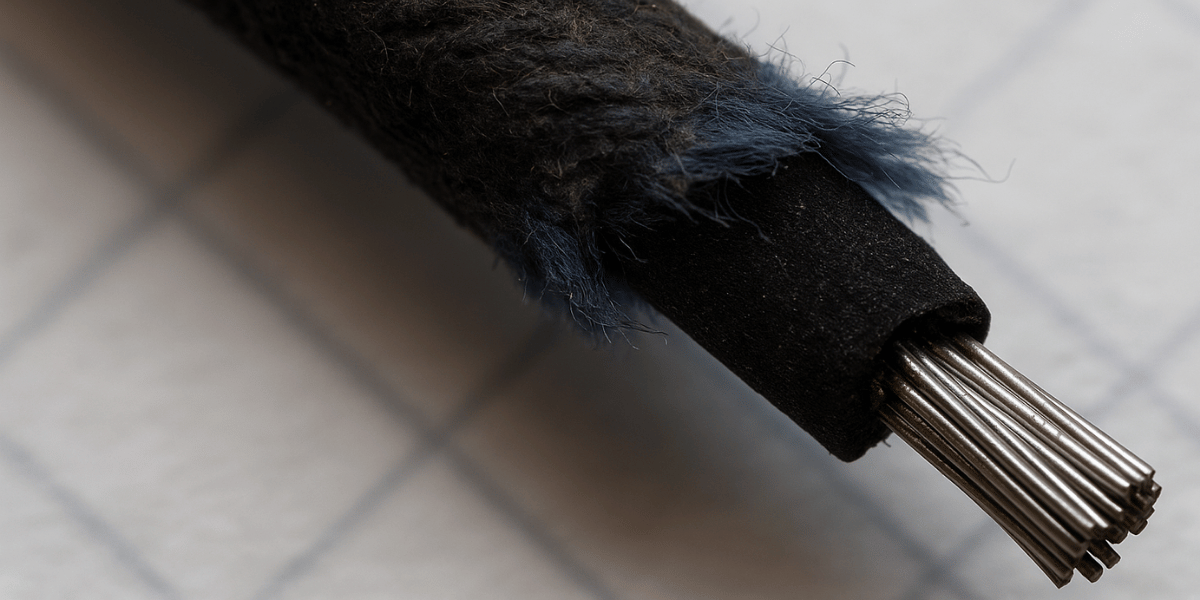
From the early 1900s through the mid-century, asbestos was added to certain electrical wiring because it resisted heat, didn’t burn easily, and held up well inside older homes. It was typically blended into the outer insulation or woven into the cloth-like covering you see on some older wiring types. The goal was simple: reduce the chance of overheating.
If your home has wiring from that era, the insulation may look fabric-like, dusty, or brittle. That alone does not confirm asbestos. Many types of older cloth wiring exist, and only some used asbestos as part of the insulation. What matters most is the condition. Asbestos inside wiring insulation is generally stable as long as the material is intact and undisturbed.
Problems tend to show up when the insulation breaks down. Age, heat, rodents, renovations, and even normal wear can cause the outer layer to crumble or flake. That is when asbestos-containing materials can become a concern, because damaged insulation has a greater chance of releasing fibers.
So in the simplest terms: asbestos in wiring is not something floating through your home on its own. It is something that might be part of the insulation around older wires, and the real question is whether that insulation is still holding together or showing signs of deterioration.
When Asbestos in Wiring Becomes a Real Concern
Asbestos in old wiring becomes a concern when the insulation is damaged. Intact insulation usually holds everything in place. The issue begins when the material crumbles or flakes, because that is when fibers can become airborne during repairs or movement. Think of it like an old sweater. If it stays together, great. If it sheds every time you touch it, not great.
Wiring from the 1930s through the 1950s has had decades to wear down. Homes with knob and tube or older cloth-style wiring are more likely to have insulation that has weakened with age.
If asbestos fibers do become airborne, the health risks come from breathing them in. Long-term exposure has been linked to lung conditions, including asbestosis and certain cancers. The important thing to know is that risk comes from repeated or ongoing exposure, not a single glance at old wiring.
Signs of trouble include brittle or dusty insulation and spots where the conductor is starting to show. At that point, the wiring is simply past its safe lifespan, whether asbestos is involved or not.
The bottom line: asbestos deserves careful handling, but deteriorating wiring is already unsafe on its own. When both show up together, replacing the circuit is the safest path forward.

How an Electrician Checks Old Wiring Safely
When we’re called to look at older wiring, the first step is simply identifying what type of insulation you have. Electricians can usually tell by the texture, color, age of the home, and how the wiring is installed. Some older cloth wiring contains asbestos, some doesn’t, and some only used it in specific layers. A quick visual inspection goes a long way.
If the insulation looks worn, flaky, or brittle, we take extra care. That might mean avoiding unnecessary movement, opening walls gently, or isolating a small section so the wiring can be examined without disturbing more than needed. The goal is to see the condition clearly without making anything worse.
In many cases, electricians recommend replacing the circuit altogether if the insulation is deteriorating. Not because of fear, but because old wiring that is falling apart can overheat or fail even if asbestos is not present. Updating it takes the guesswork out and gives the circuit a clean, safe start.
If the wiring does contain asbestos, or we suspect it does, we may coordinate with professionals who handle asbestos-containing materials. It sounds intense, but the process is routine and managed in a way that keeps everyone safe.
Next Steps
If you think your wiring might contain asbestos, the best thing you can do is leave it alone and have someone take a look. Older insulation can be fragile, and a quick visit from a licensed electrician will give you clearer answers than the internet ever will.
From there, you can decide what makes sense. Some wiring is still hanging on. Other times, it is simply too worn to trust. When you are ready, you can schedule service and we will walk you through what we find and what your options are.
You do not have to figure this out alone. A simple visit usually brings a lot of clarity and a lot less worry.
FAQs
Is asbestos in wiring common?
It shows up in some older homes, especially those with mid-century cloth-style wiring, but not all old wiring contains asbestos. The age and type of insulation matter more than the house itself.
Can I tell if my wiring has asbestos just by looking?
Not always. Some insulation looks similar whether it contains asbestos or not. An electrician can usually identify the wiring type and its condition without tearing anything apart.
Is it dangerous to leave asbestos wiring in place?
It is usually only a concern if the insulation is damaged or deteriorating. Intact insulation tends to stay stable, but old wiring that is falling apart should be replaced for safety either way.
Do I need to leave my home if asbestos is found?
Typically, no. If the wiring is intact, there is no reason to leave. If replacement is needed, the work is handled in a controlled, safe way.
