

Amperage vs Voltage vs Wattage: A Simple Guide for Homeowners
December 18th, 2025
3 min read
If you have ever tried to understand the difference between amperage, voltage, and wattage, you already know it can feel like trying to decode a foreign language. Most homeowners hear these words only when something goes wrong, like when a breaker trips, a space heater shuts off, or a light flickers for no clear reason. It is confusing, and it should not have to be.
At Integra Electrical, we explain this almost every day. With a few simple comparisons, these terms go from overwhelming to surprisingly easy. And once you understand how they work together, your whole electrical system starts to make more sense.
Before the end of this article, you will know:
- What amperage, voltage, and wattage actually mean
- How these numbers work together in a real home
- What problems show up when these numbers do not line up
What Amperage, Voltage, and Wattage Actually Mean
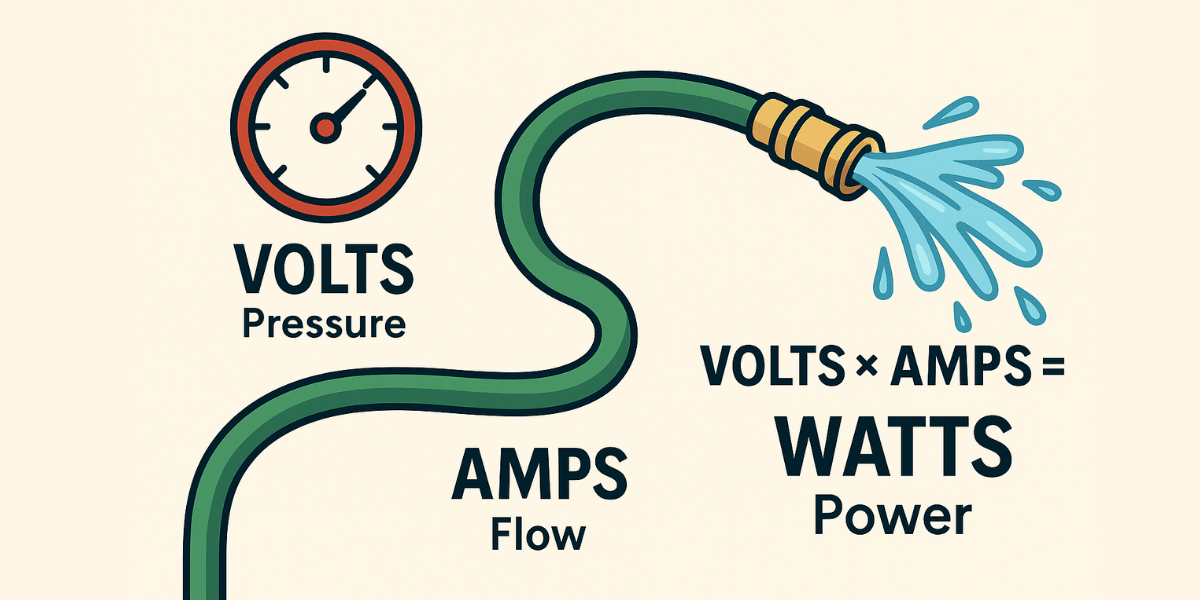
The easiest way to understand these three numbers is to picture your electrical system like water moving through a hose. It’s not a perfect comparison, unless you’ve attempted to shower while your kids are filling the bathtub and someone’s running the garden hose. Suddenly, your relaxing rinse turns into a high-stakes game of “Guess When the Water Will Come Back.”
Amperage (amps) is the amount of electricity flowing, similar to how much water is moving through the hose. More amps mean more flow.
Voltage (volts) is the pressure behind that flow. If amperage is how much water is moving, voltage is how hard it is being pushed.
Wattage (watts) is the total power used. It is the work being done by the water. You get watts by multiplying volts by amps.
Volts x amps = watts.
Pressure x flow = power.
This is why a space heater might use a lot of watts, while a phone charger uses very few. They draw different amounts of flow and pressure to do different jobs.
How These Numbers Work Together in Your Home
Every device in your home needs a certain amount of power to work. That power comes from a mix of volts and amps, the same way a garden hose needs both water flow and pressure to get the job done.
Most outlets in Iowa homes give you about 120 volts. When you plug something in, it pulls the amps it needs from that same circuit. Small items take very little. Bigger items take more. When you add all of those demands together, your circuit can only handle so much at once before it says “nope” and shuts off the breaker.
This is why a phone charger barely makes a dent, but a microwave, hair dryer, or space heater can push a circuit close to its limit. These items use more power because their job is harder. They create heat, move air, or cook food, which means they draw more electricity.
Larger appliances like air conditioners, dryers, ovens, and EV chargers need even more power, which is why they usually get their own dedicated circuits. It keeps everything running smoothly and prevents overloaded wiring.
Understanding that power is shared across a circuit makes it easier to see why some combinations work fine and others cause problems.
Common Problems When These Numbers Do Not Line Up
When the power a circuit can handle does not match what the devices on it are trying to pull, the signs usually show up in small but noticeable ways.
The most common one is a breaker that keeps tripping. That is the circuit protecting itself from too much demand. Another sign is lights that flicker when a big appliance turns on. That momentary dimming happens because the appliance is pulling a large amount of power all at once.
You might also notice warm outlets or cords, buzzing sounds, or appliances that struggle to start. These are clues that a circuit is working harder than it should.
In older homes, you may reach the limits of the panel itself. A panel that was sized for a different era can run out of room or capacity once modern appliances, lighting, and electronics are added in.
None of these issues mean something terrible is happening. They are simply signals that the electrical system needs a little attention so everything stays safe and reliable.
Next Steps
Understanding amperage, voltage, and wattage is a simple way to make sense of what your home’s electrical system is trying to tell you. If something is tripping, dimming, buzzing, or running warm, it usually means the circuit is being asked to do more than it comfortably can.
If you ever want a licensed electrician to take a look at your panel or walk through how your circuits are handling everyday use, we would be glad to help. A quick evaluation can show you what is working well and what might need an update so your home stays safe, steady, and ready for anything.
FAQs
How do I find the wattage or amperage of something in my home?
Most devices list their wattage or amperage on a small label near the cord or on the back. If only one number is listed, you can use the volts in your home to figure out the other.
Does a higher wattage always mean better performance?
Not always. Higher wattage usually means more power is being used, but the quality and design of the appliance also matter. A well designed device may use less power and still work better.
Can I safely use power strips or surge protectors?
Yes, as long as the total load stays within the strip’s rating. Power strips do not increase the amount of power available on a circuit, so they should not be used to run multiple high demand items.
Why does my home have both 120 volt and 240 volt circuits?
Some appliances need more power than a standard outlet can provide. Ovens, dryers, water heaters, and EV chargers often require 240 volts so they can run efficiently.
How do electricians decide if I need a larger panel or more circuits?
They look at how much power your home uses, how often circuits are overloaded, and how many new appliances you plan to add. The goal is to make sure your system has enough capacity for your daily life.
Daniel Carpenter is a licensed electrician on Integra’s installation team. He got his license at just 19, but he's been around the trade his whole life. With five years on the job and a heart for helping homeowners, Daniel takes pride in doing quality work that serves the local community.
